
This guide explains general care options. Your history, examination and preferences determine an individual plan. It does not diagnose a condition or promise a treatment outcome.
Start with a conversation, wherever you are in pregnancy
Pregnancy can bring excitement, uncertainty, or several feelings at once. You may be planning your first visit, returning after an earlier pregnancy, or bringing a report that has left you worried. A useful consultation begins with what matters to you today. Tell the doctor whether your main concern is symptoms, medicines, work, an earlier experience, or understanding the next investigation. You do not need to arrive with the right medical vocabulary or a perfectly organised file.
At Gynaecare in Anand, you can request a pregnancy consultation and discuss an individual plan with Dr Priscilla. This guide explains topics that can come up in that conversation. It does not set a fixed programme for every pregnancy. Your stage of pregnancy, medical history, examination and available records determine which assessments make sense. If you are transferring care, bring your existing antenatal card so the discussion can build on what has already been done.
What antenatal care is trying to achieve
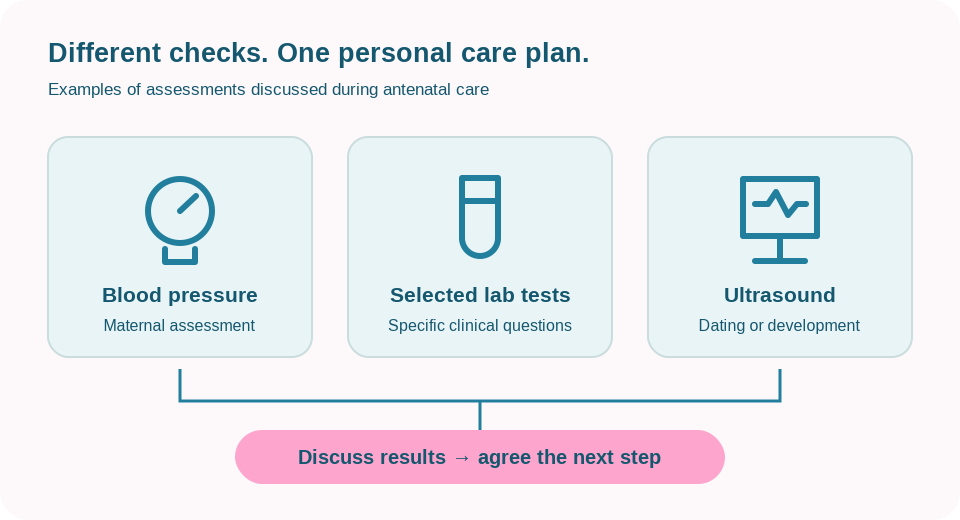
Antenatal care brings together checks on your health, your baby's development, and your preparation for birth. Depending on your stage and needs, a visit may involve blood pressure measurement, discussion of blood or urine results, and arranging or reviewing scans. Different investigations answer different questions; an ultrasound and a blood test are not interchangeable sources of reassurance. Ask what each proposed investigation is looking for, when the result will be ready, and who will explain it. [1]
It can help to divide your appointment into three questions: what do we know today, what needs checking next, and what should make me call sooner? Write those answers on your antenatal record or a small paper checklist. If a family member helps with travel or appointments, share the practical plan with them while keeping private information within the boundaries you choose. You should leave with a next step rather than a collection of unexplained instructions.
Preparing for the first visit
Bring the date of your last menstrual period if you know it, pregnancy test information, earlier scans, blood reports and a list of medicines or supplements. Note allergies and any previous operations or hospital admissions. If you have had a previous pregnancy, bring its important records too. You can mention a previous miscarriage, difficult birth or upsetting hospital experience briefly at first and ask for time to explain it privately during the visit.
Practical details matter as well. Tell the clinic if stairs, travel, long waiting periods, language or hearing make appointments difficult. If you work shifts or care for children or relatives, say so when discussing follow-up. Consider bringing one support person who can listen and help remember instructions, if that feels useful. You may also ask to speak with the doctor alone. A short list of your three biggest questions is often more useful than a long list copied from social media.
See the journey
Your antenatal care pathway
- First conversationHistory, medicines, priorities
- Personal assessmentExamination and suitable tests
- Ongoing careReview growth and wellbeing
- Birth and beyondPlan delivery and follow-up
Symptoms: describe the change, not just the label
Instead of saying that you feel unwell, describe when a symptom started, how often it happens, what makes it worse and whether it affects eating, drinking, sleeping or walking. For pain, point to the location and explain whether it is constant or comes and goes. For vomiting, explain whether you can keep fluids down. For bleeding, tell the doctor when it happened and whether pain or dizziness came with it.
This information helps the clinician decide how urgently you need assessment; a web page cannot safely make that decision from a symptom name alone. Do not assume that something is harmless because another person had it in pregnancy. Equally, an unfamiliar symptom does not automatically mean that the pregnancy is in danger. The purpose of assessment is to understand your particular situation. If symptoms are severe or rapidly worsening, seek urgent care instead of trying to finish an online form. [2]
Understanding scans and screening choices
A scan may be used to assess pregnancy dating, development or other specific concerns. Screening estimates the chance of certain conditions, while a diagnostic investigation addresses a more specific question. A result described as higher chance is not the same as a confirmed diagnosis. Ask the clinician to explain what the test can show, what it cannot rule out, and whether another discussion or investigation follows an unexpected result. [1]
Before an investigation, ask whether you need any preparation and whether earlier reports should come with you. Afterwards, keep the complete written report rather than only a photograph of one number. If a report uses a term you do not understand, underline it and bring it to the consultation. Avoid comparing isolated measurements with another person's scan or an internet chart. The date, clinical context and reason for the examination affect how a result is interpreted.
When a pregnancy needs closer monitoring
Some pregnancies need additional appointments or specialist input because of an existing condition, something in a previous pregnancy, or a concern identified during current care. A description such as high risk is a planning term, not a prediction that something will definitely go wrong. Ask which particular issue is being monitored and how the plan differs from routine care. This makes the label less frightening and the practical responsibilities clearer.
If another clinician is involved, keep a single folder containing the latest advice and ask who is coordinating decisions. Tell each clinician which medicines you take and whether another prescription has changed. Useful questions include who should receive a new report, which symptoms need urgent review, and where you should go if the clinic is closed. Do not adjust a medicine yourself because a general online article mentions pregnancy risks; ask the prescribing clinician to review its benefits and risks for you.
Medicines, meals and everyday routines
Bring every prescription, over-the-counter medicine, herbal product and supplement into the discussion. Photographs of packaging can help when names are difficult to remember. Ask which products should continue, which need review, and whether two supplements contain the same ingredients. A recommendation from a friend, shop or online video may not match your medical history. Avoid starting or stopping treatment on the basis of marketing language such as natural, pregnancy safe or immunity boosting.
Ask for practical advice that fits your meals, working hours, budget and symptoms. If nausea makes a planned routine difficult, explain what you can actually manage. If travel to Anand is tiring, discuss appointment timing and which reports can be brought together. The aim is an understandable daily plan, not a perfect-looking checklist. Write down changes and bring them to the next visit so that the doctor can see what was feasible and what needs adjusting.
Emotional wellbeing and personal boundaries
It is reasonable to talk about worry, low mood, sleep or an earlier difficult experience during antenatal care. You do not have to describe pregnancy as a happy time if that does not reflect how you feel. Consider telling the doctor what worries you most: a test result, childbirth, finances, family pressure or something unrelated to pregnancy. Naming the concern can make it easier to agree what kind of support would be useful.
You can decide who comes into the consultation and what is shared with them. Ask for explanations before an examination and say if you need a pause. If a discussion is sensitive, request a private conversation rather than relying on a relative to translate everything. When you get home, choose one or two trusted sources for general reading. Constantly checking alarming stories can make it harder to remember the personalised advice that applies to your pregnancy.
Preparing for birth and the weeks afterwards
Birth planning is a conversation about preferences, practical arrangements and the possibility that plans may change. Ask where delivery care will take place, who to contact when labour is suspected, which records to carry, and how transport will be arranged. Discuss how the team will explain a change in plan if an urgent decision is needed. A preference can guide care without being a guarantee about the eventual method of birth.
Include the weeks after birth in the conversation. Ask when your own follow-up should happen and where to raise questions about recovery, feeding support, contraception or emotional wellbeing. Make a small practical plan for meals, travel and help at home. A relative who wants to support you may find a specific task more useful than a general request to help. Keep contact details somewhere accessible to the people you want involved, rather than only inside a phone that may not be charged.
Warning signs deserve a different route
Routine appointment systems are designed for planned care. Significant bleeding, severe pain, fainting, breathing difficulty, a severe headache with visual changes or concern about reduced baby movements need a more immediate route. Contact appropriate emergency or maternity services promptly. Do not wait for a reply to a message, the next available web slot, or reassurance from an online symptom comparison. Pregnancy warning signs need assessment in their clinical context. [2]
Before leaving a routine consultation, ask the doctor to write down where you should go if an urgent concern happens later. Confirm whether the contact number is for the clinic, a hospital or emergency transport, and save it with a clear name. If another person may accompany you, let them know where the records are kept. Preparing these details during a calm appointment is more useful than trying to make unfamiliar arrangements while you feel unwell.
What follow-up and outlook really mean
An individual pregnancy cannot be judged by a generic reassurance statement on a website. At follow-up, ask what has changed since the previous visit, whether the current findings alter the plan and when the next assessment should happen. If a concern is being watched, ask which future finding would lead to a different decision. You can request a simple explanation without needing to understand every technical term in the report.
Keep a brief record of questions that appear between visits. Separate something you want to discuss next time from a symptom that needs a call today. If you are unsure which category a new concern belongs in, contact a qualified clinician. A helpful care plan includes both ongoing monitoring and a clear route for unexpected changes. It should also recognise your practical needs: distance from the clinic, availability of transport, work responsibilities and the people you would like involved.
Requesting pregnancy care in Anand
Use the appointment page to request a consultation with Dr Priscilla and choose an available time. An online request becomes confirmed only after clinic acceptance. Check the current booking notice and contact details on the booking page, because clinic settings may change. If you need help choosing an appointment type, contact the clinic and describe whether you are planning pregnancy, already pregnant, transferring care or seeking review of a report.
Bring your records and write down the outcome you want from the visit. It might be understanding a result, checking a symptom or organising the next phase of care. You do not need to solve everything before attending. The purpose of a consultation is to put the information together, explain your options and agree what happens next. For urgent symptoms, use the emergency route described above rather than a routine appointment request.
Sources & further reading
General clinical information is informed by the sources below. Numbered references in the guide correspond to this list. Source links checked 24 October 2026. Local care arrangements are discussed with the clinic; UK service schedules and funding rules do not describe Indian clinic services.
Bring any questions about this information to your consultation.
Your next step
Bring your questions.
We’ll start there.
Request a consultation with Dr Priscilla in Anand. Bring your medicines and earlier reports, and tell us what you want help understanding.
Find an appointmentContact the clinic