This guide explains general care options. Your history, examination and preferences determine an individual plan. It does not diagnose a condition or promise a treatment outcome.
You do not need to minimise the effect on your life
Period concerns can affect school, work, sleep, travel, relationships and confidence. You may have learned to organise your month around pain or unexpected bleeding, or to dismiss changes because someone told you they were normal. A consultation is worthwhile when your pattern worries you or disrupts daily life. You do not have to prove that your symptoms are worse than another person's before asking for an explanation.
At Gynaecare, the starting point is your experience and what you would like to change. That might be less pain, more predictable bleeding, an explanation for missed periods, help with acne or a discussion about future pregnancy. These goals are related but not identical. This guide explains how to prepare for a conversation with Dr Priscilla in Anand and how assessment, treatment decisions and follow-up can fit together. It is general education rather than a diagnosis from your symptoms alone.
Describe the pattern before choosing a diagnosis
Write down when your periods began to change, the first day of recent periods, roughly how long bleeding lasts, and how pain affects your usual activities. Mention bleeding between periods or after sex. Describe flooding, leakage or the need to change products unusually often in your own words. If you feel tired, breathless or lightheaded, include that information rather than treating it as a separate inconvenience. Heavy bleeding can have a substantial effect on everyday life. [2]
You do not need a paid tracking app or a perfect six-month chart. A paper calendar and a few notes are enough to begin. Record what happened and how it affected you, without trying to infer hormone levels from every symptom. If your phone is shared, consider how you want private notes stored. Bring an approximate account even when dates are uncertain; avoiding the visit until you have collected ideal information can delay a useful discussion.
What PCOS means, and what it does not mean
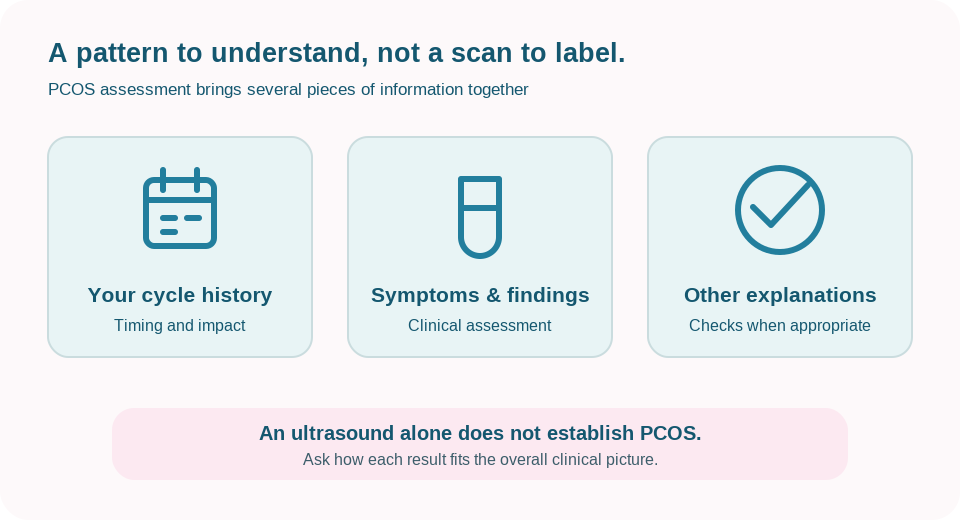
PCOS is a hormonal and metabolic condition that can involve irregular ovulation, androgen-related symptoms such as excess hair or acne, and longer-term health considerations. People experience it differently. Not everyone has the same symptoms, and the word cysts can be misleading: ovarian cysts are not required for a PCOS diagnosis. A diagnosis depends on the overall clinical picture and excluding other explanations, rather than a single label on a scan. [1]
An internet checklist can help you prepare questions, but it cannot determine whether PCOS explains your situation. If you have already been diagnosed, ask which findings supported that conclusion and what the next step is. If your report describes a polycystic appearance, bring the full report and ask how it relates to your cycle history. You should be able to understand the reasoning without feeling that an unfamiliar term has suddenly defined your entire health or future.
See the journey
From a changing pattern to a personal plan
- Notice the patternBleeding, pain, skin and wellbeing
- Explore the causeHistory and selected tests
- Choose your goalComfort, cycle care or fertility
- Review togetherSymptoms, results and next steps
Other causes deserve attention too
Irregular, painful or heavy periods do not all have the same cause. The doctor will consider your life stage, pregnancy possibility, medicines, medical history and the pattern of symptoms. Structural conditions and other health problems can also contribute to bleeding or pain. A consultation should leave space to investigate the actual concern instead of assuming that every menstrual symptom must be PCOS. [2]
Tell the doctor about recent changes even if they seem unrelated: a new medicine, a major change in routine, an earlier procedure or a significant illness. Bring previous reports so that investigations are not interpreted in isolation. If you have been given several different diagnoses, list when each was made and what information was available. Ask whether the next investigation is intended to confirm a suspected cause, exclude an alternative or help choose treatment. The answer makes the purpose of testing much clearer.
What can happen during an assessment
The consultation usually starts with history and a discussion of symptoms, priorities and pregnancy plans. Depending on what emerges, the doctor may suggest an examination, blood tests or imaging. You can ask what a proposed examination involves, why it is relevant and whether a chaperone is available. Consent is a conversation: you can ask questions, request a pause or explain that a previous experience makes a particular step difficult.
Before a test, ask if timing within your cycle matters and whether any current medicine affects interpretation. Afterward, keep the entire report with its date and reference ranges. A highlighted number is not a diagnosis by itself. At review, ask how the results fit with your symptoms and whether a result actually changes the plan. If the findings do not fully explain how you feel, say so. A useful follow-up should connect the clinical information to the original concern that brought you in.
Treatment begins with the outcome you want
The most helpful treatment discussion starts by choosing a priority. Someone seeking more predictable bleeding may need a different plan from someone actively trying to conceive. Another person may mainly want help with acne, unwanted hair or pain. Ask which part of the plan addresses which concern. Understanding that link can make a prescription feel like a choice you are part of, rather than a set of unexplained tablets.
For PCOS, available approaches may include lifestyle support and medicines for particular symptoms or fertility goals. There is no single permanent cure, but symptoms and associated health risks can be managed. Decisions should reflect your circumstances and preferences. [1] Do not start hormone or fertility medicines from an online recommendation. Bring the names of products you are considering and ask whether they are appropriate, what monitoring they need and what would make the doctor change or stop them.
Daily habits without blame or unrealistic rules
Discussions about food, activity, sleep and stress should be practical and respectful. Explain what an ordinary weekday looks like, including work hours, caring responsibilities, meals and opportunities to move. A plan that assumes unlimited time, expensive foods or a completely predictable schedule may not be useful. Ask for one or two achievable actions and agree when to discuss how they went. You can ask for support without accepting blame for the condition.
Be cautious about accounts that promise to reset hormones, cure PCOS quickly or guarantee pregnancy through a restrictive diet. If you have been following such advice, bring the details rather than feeling embarrassed. It helps the doctor understand what you have already tried. Useful progress notes might describe energy, sleep, symptoms or whether a routine felt manageable. Your care should make space for everyday wellbeing as well as measurements, and should not reduce your experience to a single number.
Fertility questions can be discussed early
You do not have to wait until you are ready for pregnancy to ask what a PCOS diagnosis means for future planning. Equally, a fertility discussion should not take over an appointment when pregnancy is not your current goal. Tell the doctor whether you want information for the future, contraception now, or an assessment because you have been trying to conceive. The answer changes the practical conversation.
Irregular ovulation can be relevant to fertility, but PCOS does not mean that pregnancy is impossible. [1] Ask about an appropriate assessment rather than assuming you need the most intensive treatment. If you are trying with a partner, discuss whether both partners need evaluation and what can happen in parallel. Bring previous reports and any fertility medicines already used. Write down what monitoring was done during earlier treatment, because the treatment name alone may not explain the previous experience.
Private concerns and emotional wellbeing belong here
Changes in hair growth, skin, bleeding or fertility can affect confidence and relationships. You may also feel exhausted by repeatedly explaining the same history. Start by telling the doctor which aspect feels hardest to talk about. You can ask for a private discussion, choose whether a family member joins you, and explain which information you want kept within the consultation. These preferences help shape a conversation you can actually participate in.
If you have avoided activities because of unpredictable bleeding, describe a recent example. If a treatment routine feels overwhelming, explain which part is difficult. This turns a broad statement such as I cannot manage into something the clinician can respond to. A written summary can also help if you become anxious during appointments. You should not need to present a cheerful or highly organised version of yourself to be taken seriously. Your concerns and practical limits are relevant information.
Follow-up should measure what matters to you
Before leaving, agree when the plan will be reviewed and what you should bring back. A useful review compares current symptoms with the concerns recorded at the beginning. Ask how long the proposed approach usually needs before its effect can be assessed, which side effects should prompt contact, and whether any investigation needs repeating. The timing should come from the clinician rather than a general expectation that every treatment works immediately.
Keep the record simple enough to continue. A short note about bleeding days, pain, medicines taken and missed activities may be enough. If you stop a medicine or cannot follow part of the plan, tell the doctor at review so that results are interpreted accurately. Ask for an explanation if a new recommendation seems to contradict earlier advice. The purpose of follow-up is to make informed adjustments, not to judge how perfectly you followed a difficult routine.
Know when not to wait for a routine slot
Very heavy bleeding accompanied by faintness or marked weakness, sudden severe pelvic pain, or bleeding and pain when pregnancy is possible require prompt medical assessment. Use urgent services rather than waiting for a routine appointment or a reply to a website message. If you are unsure whether symptoms can wait, contact a qualified clinician and describe their severity and associated symptoms.
For ongoing concerns that are not urgent, a planned visit gives you time to discuss the pattern and possible next steps. Keep previous investigation reports together and note any important change since they were performed. Do not assume that an old reassuring result answers a new or different symptom. Ask the doctor to explain which changes should lead you to seek help sooner than the scheduled review. A clear escalation plan is part of understanding the treatment plan.
Book a conversation about your cycle in Anand
You can request a consultation with Dr Priscilla through the appointment page and bring the questions that matter most to you. The clinic confirms requests after review; selecting a time does not itself establish a diagnosis or guarantee a particular treatment. If you have recently had tests elsewhere, bring those results before arranging another set on your own. If you need help explaining the purpose of the visit, use plain words such as heavy periods, missed periods or PCOS review.
Your appointment can focus on understanding the cause, choosing symptom relief, discussing fertility or reviewing a previous plan. These needs may overlap, but they do not all have to be resolved in one conversation. Start with the concern affecting your life now, ask what the next step is, and agree how progress will be reviewed. Good menstrual healthcare should leave you better informed about your options and more confident about when to seek help.
Sources & further reading
General clinical information is informed by the sources below. Numbered references in the guide correspond to this list. Source links checked 24 October 2026. Local care arrangements are discussed with the clinic; UK service schedules and funding rules do not describe Indian clinic services.
Bring any questions about this information to your consultation.
Your next step
Bring your questions.
We’ll start there.
Request a consultation with Dr Priscilla in Anand. Bring your medicines and earlier reports, and tell us what you want help understanding.
Find an appointmentContact the clinic