This guide explains general care options. Your history, examination and preferences determine an individual plan. It does not diagnose a condition or promise a treatment outcome.
There is no need to wait until symptoms become unbearable
The menopause transition may arrive while work, children, older relatives and daily responsibilities already take most of your attention. Sleep changes, unpredictable periods or discomfort can be easy to push aside. You may feel unsure whether a change is significant enough for a consultation. If symptoms affect your routine, confidence, relationships or comfort, that is a reasonable starting point for asking for help. You do not have to compare your experience with someone else's.
At Gynaecare in Anand, you can discuss your symptoms and priorities with Dr Priscilla and ask about an individual assessment. This guide explains the kinds of questions that can support that conversation. It does not assume that every symptom is caused by menopause or that everyone needs the same treatment. A useful appointment should connect the changes you notice with your medical history, preferences and practical needs, and leave you with a clear plan for review.
Understanding perimenopause and menopause
Perimenopause is the transition during which periods and other symptoms can change before periods stop. Menopause is generally recognised after twelve months without a period when hormonal contraception or another explanation is not affecting the pattern. The transition commonly happens in midlife, but it can occur earlier. [1] The date alone does not describe how someone feels or determine whether they need support.
You may hear several terms used around the same time: perimenopause, menopause, postmenopause or early menopause. Ask which term fits your situation and why it matters for the decision being discussed. If you have had surgery, take hormonal medicines or have a condition that affects periods, mention it at the beginning. It can make the bleeding pattern harder to interpret. A simple timeline of periods, operations and medicines is often a useful way to introduce the discussion without having to remember every detail aloud.
Symptoms can reach beyond hot flushes
Period changes, hot flushes, night sweats, disturbed sleep, mood changes and vaginal or urinary discomfort can occur during the transition. People differ in which symptoms they notice and how much they affect everyday life. [2] A symptom may be familiar in menopause and still deserve assessment for another cause. Tell the doctor about anything new or persistent rather than trying to fit it into a menopause checklist yourself.
Choose two or three examples that show the impact: waking repeatedly before an early work shift, avoiding a long journey because of bleeding, or feeling discomfort during intimacy. These examples can make the main priority clearer than a long list of symptom labels. If several problems overlap, ask which should be addressed first and what can be reviewed later. The aim is to understand how you feel as a whole person without turning every change into a separate worry or a reason for unnecessary testing.
See the journey
A personal menopause care conversation
- Name the changePeriods, sleep, comfort and mood
- Assess the pictureHistory and appropriate checks
- Discuss optionsBenefits, risks and preferences
- Review the effectAdjust the plan as needs change
Prepare a short record that reflects real life
Before the visit, write down recent period dates if available, your main symptoms, when they started and what has become harder to do. List medicines, contraception, supplements, allergies and important medical or surgical history. Bring previous reports, especially if another clinician has investigated bleeding or recommended treatment. If you have started a product marketed for menopause, include its packaging or ingredients in the discussion.
You do not need to complete an elaborate daily tracker before requesting care. A fortnight of brief notes may help you remember patterns, but an approximate history is still useful. Consider noting which concern you most want to improve and what a useful result would look like. For example, you might want a clearer explanation, more comfortable intimacy, a workable sleep plan or help comparing treatment options. Your goal helps shape the consultation and gives the follow-up a practical point of reference.
Diagnosis does not always require a hormone panel
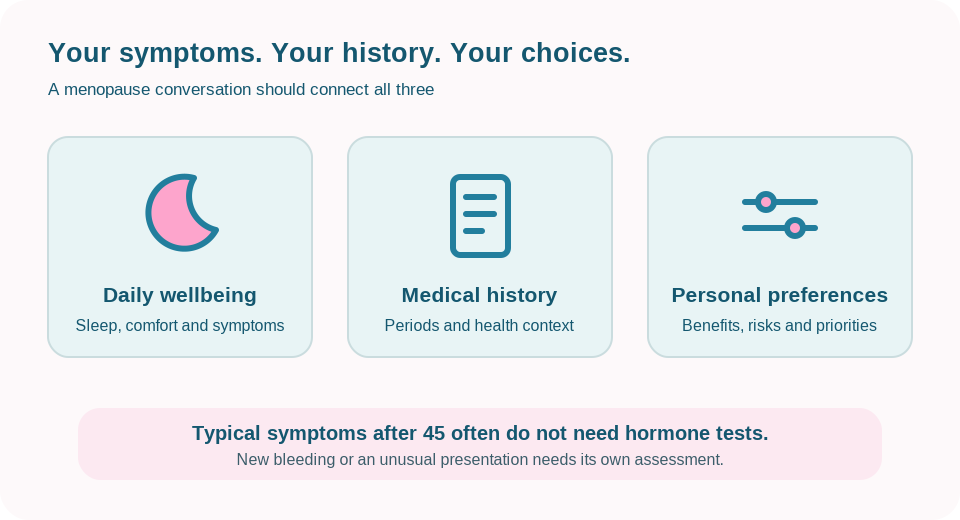
For otherwise healthy people aged forty-five or over with a typical history, menopause or perimenopause can often be identified clinically without hormone tests. Younger age, unusual features or a different medical context may lead to another approach. NICE advises against routinely using several hormone and imaging tests to identify menopause in the usual over-forty-five setting. [3] A long list of tests is not automatically a more complete assessment.
If a test is suggested, ask what question it addresses and how its result could change the plan. If testing is not recommended, ask how the doctor has reached the working explanation. You should understand the reasoning in either case. Bring concerns about thyroid problems, anaemia or other possibilities into the discussion without assuming you need a particular panel. The right assessment starts with the history and clinical question, rather than a package offered to everyone who uses the word menopause.
Discussing hormone replacement therapy
Hormone replacement therapy, often called HRT, is one treatment option for menopause symptoms. The type considered depends on factors such as symptoms, whether the uterus is present and the person's medical history. Different preparations and routes are available, and decisions should consider the expected benefits and relevant risks. [4] A consultation is the place to discuss whether an option is appropriate for you, rather than copying someone else's prescription.
Bring any concerns you have about treatment, including stories that have made you reluctant to consider it. Ask which symptom the proposed treatment is intended to improve, what uncertainty remains, what side effects to watch for and when review should happen. If you have previously tried treatment, describe the preparation, how long you used it and why you stopped. Those details help the clinician distinguish between a treatment that did not suit you and an option that was never properly assessed.
Non-hormonal support is part of the conversation
You can ask about non-hormonal approaches whether you prefer them, have a reason to avoid HRT or want support alongside another treatment. The discussion may include practical changes and suitable psychological or medical options for specific symptoms. NICE includes menopause-specific cognitive behavioural therapy among options for certain concerns. [3] Not every product or technique advertised for menopause has the same evidence or relevance to your particular symptoms.
Ask what an approach is trying to change, how much effort or cost it involves, and how you will decide whether it is helping. If a plan depends on a routine that does not fit shift work, caring responsibilities or your home environment, explain that before leaving. A workable small change is easier to assess than a large set of instructions abandoned after a few days. You can also ask which concerns need another kind of assessment rather than being managed through menopause support alone.
Vaginal, urinary and sexual concerns deserve privacy
Dryness, discomfort during intimacy or urinary symptoms can feel difficult to mention, especially with a relative present. You may ask for a private conversation or begin by writing the concern down. You do not need to accept discomfort simply because it seems related to age. These symptoms can be discussed alongside other menopause concerns, while the clinician checks whether a different explanation or investigation is relevant.
Treatment discussions may include vaginal moisturisers, lubricants or local hormonal options when appropriate. [4] Ask what each option is for and how it differs from a systemic treatment. Do not assume that a product called intimate wellness is automatically suitable, or that a cosmetic procedure is the necessary next step. Explain what comfort and sexual wellbeing mean for you. The aim is an informed choice that respects your preferences, relationship situation and medical history, rather than pressure to pursue a particular treatment.
Bleeding needs its own assessment
Bleeding after menopause should be checked even if it is only spotting, happens once or seems related to intercourse. Many explanations are not serious, but a clinician needs to assess it rather than treating it as an expected part of getting older. [5] Tell the clinic when the last natural period occurred, what the bleeding was like and whether you use hormonal treatment. Do not wait for it to become heavy before raising the concern.
If you are using HRT and notice bleeding, contact the prescribing clinician for advice on its timing and pattern. Bring the exact preparation and details of recent changes. Do not assume that any bleeding on treatment is harmless or that a general website can tell you which investigation is needed. If bleeding is severe or accompanied by collapse, marked weakness or other urgent symptoms, use urgent medical care. A routine review and a new concerning symptom may need different appointment arrangements.
Think about wellbeing beyond a prescription
Use the consultation to discuss how symptoms affect sleep, work, movement, relationships and everyday confidence. Ask which wider health topics are relevant for you and whether they need a separate appointment. You might want to discuss bone health, long-term medical conditions or preventive care alongside symptom relief. The point is to organise priorities into a manageable plan rather than trying to solve every health question in one rushed conversation.
At home, consider what help you can request in concrete terms. It might be a cooler sleeping arrangement, a different division of evening tasks, a private place for a video consultation or someone to accompany you to an appointment. Avoid measuring success against an ideal routine in a wellness advertisement. A plan should fit your circumstances and be open to adjustment. Bring back what worked, what was difficult and which symptom still interferes most with the life you want to lead.
Review is where the plan becomes personal
Before leaving, agree when to review the approach and how to contact the clinic if a concern arises earlier. Ask what improvement would count as useful, which effects should be monitored and whether any investigation needs follow-up. If treatment is started, keep the instructions with the prescription so you do not have to rely on memory. A review is an opportunity to check benefit, tolerability and whether your priorities have changed.
There is no single timetable or prognosis that fits every person. Symptoms and circumstances can change, so the plan may need adjustment over time. [2] Tell the doctor if you are considering stopping treatment or have already changed it. Explain new medical information or prescriptions from another clinician. A useful review should connect those changes to the original decision and help you understand what comes next. It should not leave you feeling that you must continue a plan simply because it was the first one suggested.
Request menopause care in Anand
You can request a consultation with Dr Priscilla through the Gynaecare appointment page and bring your symptom notes, medicines and earlier reports. Mention if your main concern is bleeding so the clinic can advise on an appropriate assessment route. A request is confirmed after clinic review; a general guide cannot determine how urgently an individual symptom needs examination. If you need help arranging a private conversation, contact the clinic before attending.
You deserve an explanation that takes your concerns seriously and leaves you with choices you understand. Whether the next step is an assessment, a trial of treatment, practical support or further investigation, ask how it relates to your main goal and when to review it. Menopause care can make room for symptoms, medical history, personal preferences and everyday life in the same conversation. Start with the change that matters most to you and build a plan from there.
Sources & further reading
General clinical information is informed by the sources below. Numbered references in the guide correspond to this list. Source links checked 24 October 2026. Local care arrangements are discussed with the clinic; UK service schedules and funding rules do not describe Indian clinic services.
- NHS: menopause and perimenopause
- NHS: symptoms of the menopause transition
- NICE: menopause identification and management
- NHS: treatment choices
- NHS: postmenopausal bleeding
Bring any questions about this information to your consultation.
Your next step
Bring your questions.
We’ll start there.
Request a consultation with Dr Priscilla in Anand. Bring your medicines and earlier reports, and tell us what you want help understanding.
Find an appointmentContact the clinic